
What is chimney pointing?
Chimney pointing refers to the visible mortar applied to the joints around the bricks of your chimney. Over time, weather exposure, frost, and heat from the flue cause that mortar to crack or fall away.
Fresh pointing seals the gaps, strengthens the stack and stops water from finding its way into the brickwork, loft, or fireplace areas. It’s a key part of chimney maintenance that prevents long-term structural problems.
Why Looking After Your Chimney Is So Important
Your chimney is one of the most exposed parts of your home. High above the roofline, it takes the full force of wind, rain, frost and constant temperature changes. Over time, this wear can weaken the brickwork, loosen joints and create gaps that allow water to work its way into the property.
A neglected chimney doesn’t just look tired — it can lead to damp patches in the loft, damaged ceilings, brick decay and, in some cases, instability at the top of the stack. These issues often develop slowly and go unnoticed until the repair work becomes far more costly.
Regular checks and timely maintenance keep the chimney safe, weather-tight and structurally sound. By dealing with small problems early, you protect both the appearance of your home and the long-term health of the brickwork.
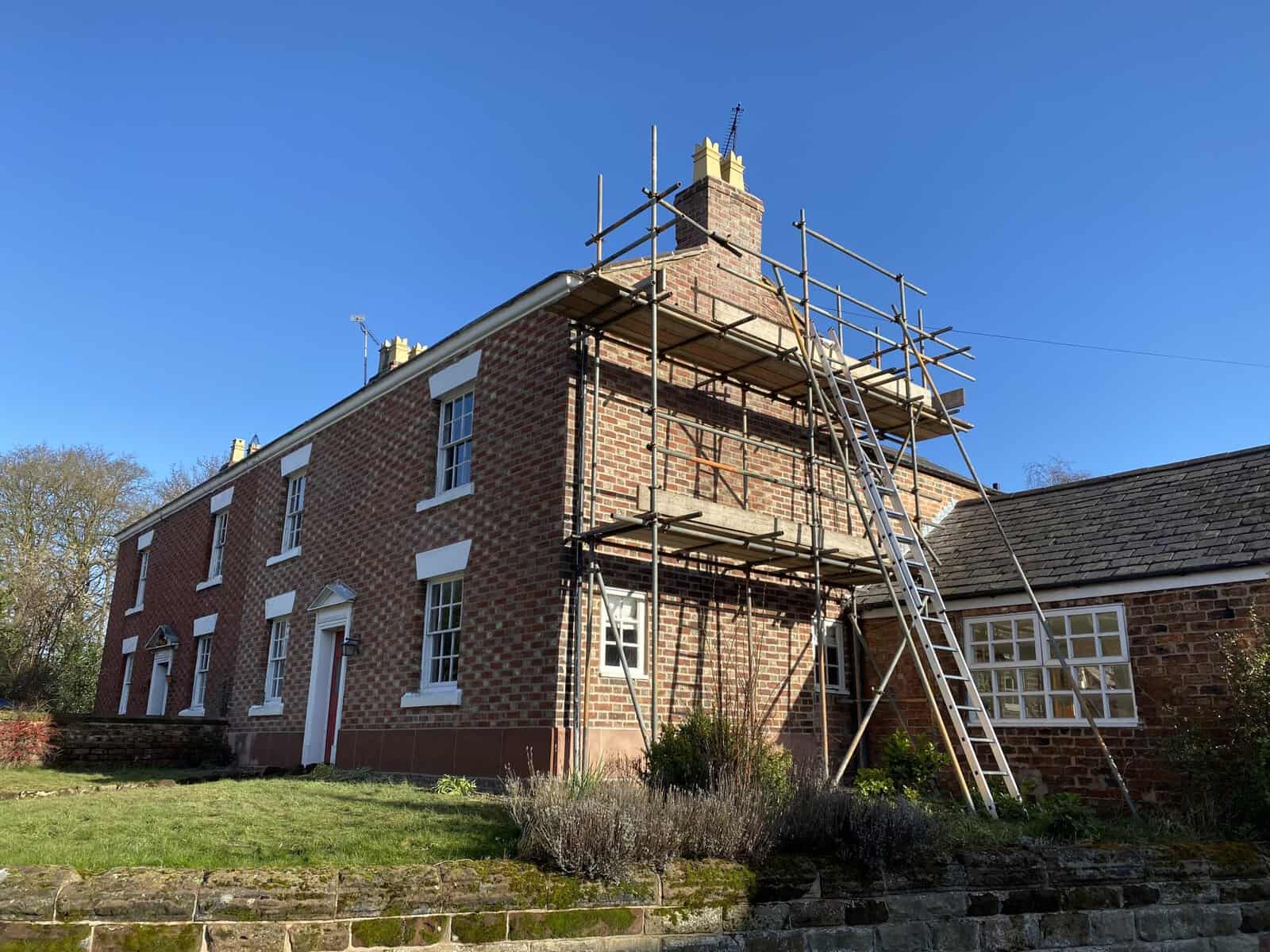
Our Chimney Services
Full Chimney Repointing
A full repoint involves removing all the deteriorated mortar joints throughout the chimney stack and replacing them with fresh mortar.
This restores structural integrity, prevents water ingress and extends the lifespan of your chimney by decades.
Chimney Patch Repointing
Ideal when only specific areas have failed. We carefully rake out and repoint only the damaged sections while blending new mortar seamlessly with the existing joints for a discreet and cost-effective repair.
Chimney Pot Flaunching & Crown Pointing
The flaunching is the sloped bed of mortar that holds your chimney pots in place and sheds water off the top of the stack.
We repair and repoint cracked or loose flaunching, re‑bedding the pots where needed so water can’t track into your loft or down the chimney breast.
Lime Mortar Chimney Repointing
Older brick and stone chimneys often need breathable lime mortar rather than hard modern cement.
We carefully rake out failed or inappropriate joints and repoint using compatible lime mixes, matching the colour and profile so your chimney keeps its character while staying watertight.
Chimney Pointing
Chimney pointing is ideal where the stack is generally sound but the mortar faces are starting to weather or hairline cracks are appearing.
We apply fresh mortar to the exposed joints, tightening everything up, improving weather resistance and smartening the appearance without the cost of a full repoint.
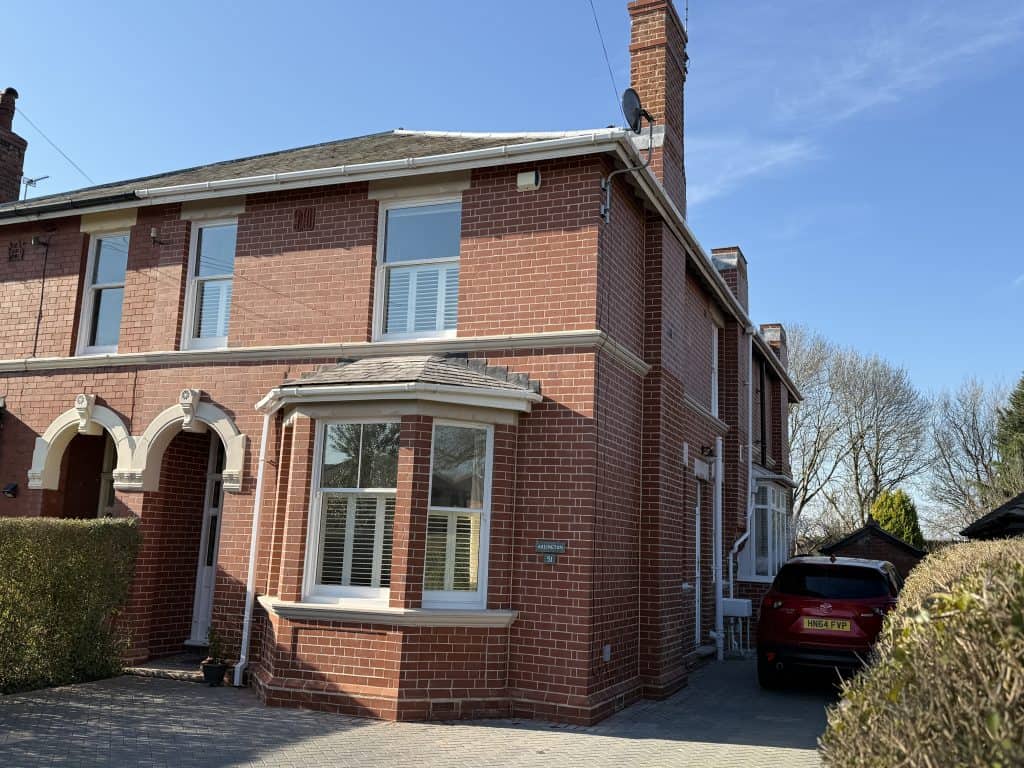
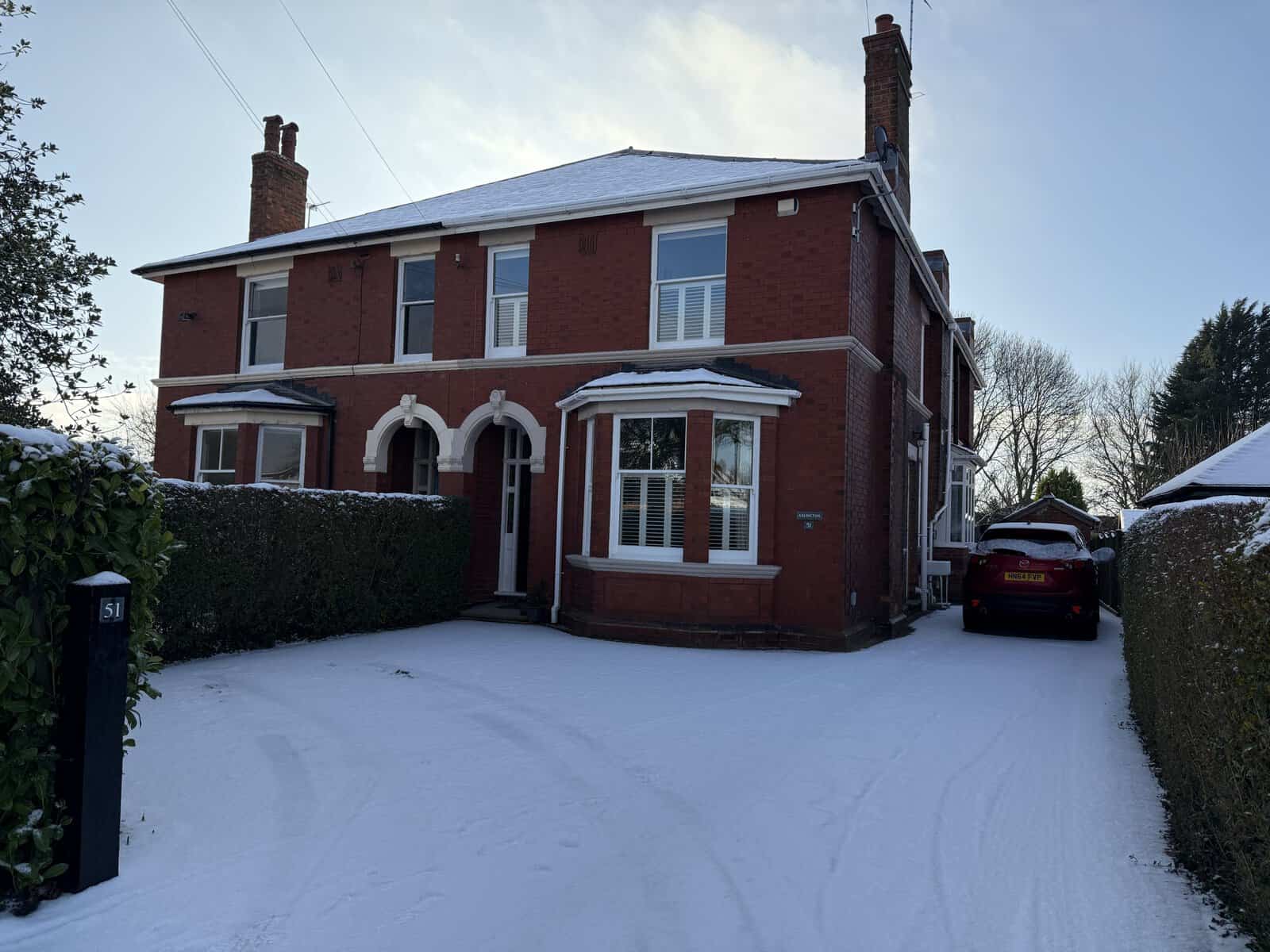

Why Point or Repoint Your Chimney?
Your chimney is exposed to the harshest weather conditions and often deteriorates faster than the rest of your property. Damaged mortar or brickwork can allow water to penetrate, causing leaks, damp and even structural instability.
At Cheshire Pointing Ltd, we offer a complete range of specialist chimney repointing and repair services to keep your property safe, watertight and compliant.
Chimney repointing in Alderley Edge
Chimneys sit above the roofline and take the brunt of the weather. When the mortar starts to fail, the stack can begin letting in water, loosening bricks, and shifting pots. Repointing is often the simplest way to stop that damage spreading — provided it’s done properly.
Cheshire Pointing Ltd offers chimney repointing across Alderley Edge, including:
- full repointing,
- patch repointing where only parts have failed,
- and pot flaunching/crown pointing at the top of the stack.
You’ll get a clear quote and practical advice on whether repointing is the right fix, or whether the chimney needs a more involved repair.
What chimney damage looks like (before it becomes a rebuild)
A lot of people only notice a problem when there’s a leak inside, but chimneys usually give warning signs outside first.
Look out for:
- gaps appearing between bricks,
- mortar that crumbles when you touch it,
- vertical cracking through joints,
- brick faces breaking away (often after years of hard cement pointing),
- flaunching that has cracked and started to hold water,
- pots that look slightly tilted, or staining running down the stack.
Catching these early can save you from needing larger repairs later.
Common local factors affecting chimneys in Alderley Edge
Alderley Edge has a broad mix of property styles. Some stacks are newer brickwork, while others have older brick or stone elements that don’t respond well to “one size fits all” repairs.
Problems we often see in areas like Alderley Edge include:
- Older mortar wearing out unevenly (often the weather-facing side takes the hit)
- Previous repointing done too hard using strong cement mortar that doesn’t move with the brickwork
- Cosmetic issues where patch repairs have been done without matching the mortar colour or joint finish
- Damp-related damage around the top courses if crown pointing has failed and water is sitting on the stack
The goal isn’t just to fill gaps. It’s to leave a chimney that sheds water properly, stays stable, and still looks right on the house.
How we repoint chimneys (the practical steps)
Chimney repointing is high-level work and it has to be approached with safety first. We won’t cut corners on access or preparation, because that’s where jobs fail.
Our typical approach:
- Inspection and scope
- Access and protection
- Raking out and cleaning joints
- Repointing with the right mortar
- Checking the top of the stack
- Clean finish and tidy site
Choosing the right mortar and finish
Getting chimney pointing “right” is as much about suitability as it is about appearance.
Colour and joint style matching
On visible chimneys, mismatched mortar stands out. We take care to match the look as closely as practical so the repair doesn’t draw the eye for the wrong reason.
Lime mortar for older stacks
If the chimney is older and originally built with lime mortar, using strong cement can trap moisture and damage the bricks over time.
Where appropriate, we use lime mortar to keep the stack breathable and reduce the risk of ongoing brick decay.
Repointing vs chimney repair/rebuild
Repointing is a good solution when:
- the bricks are generally sound,
- the stack is stable,
- and the main issue is failed joints or failing crown/flaunching.
You’re more likely to need chimney repair or rebuilding if there’s:
- structural cracking,
- a leaning stack,
- widespread spalled bricks,
- or movement around the base of the chimney.
We’ll be straight with you about it. If a rebuild is the sensible long-term fix, we won’t pretend pointing alone will solve it.
Get a quote for chimney repointing in Alderley Edge
Call Cheshire Pointing Ltd on 01625 920 888 or email enquiries@cheshirepointing.co.uk for an inspection and a clear quote.
Before And After Chimney Repointing
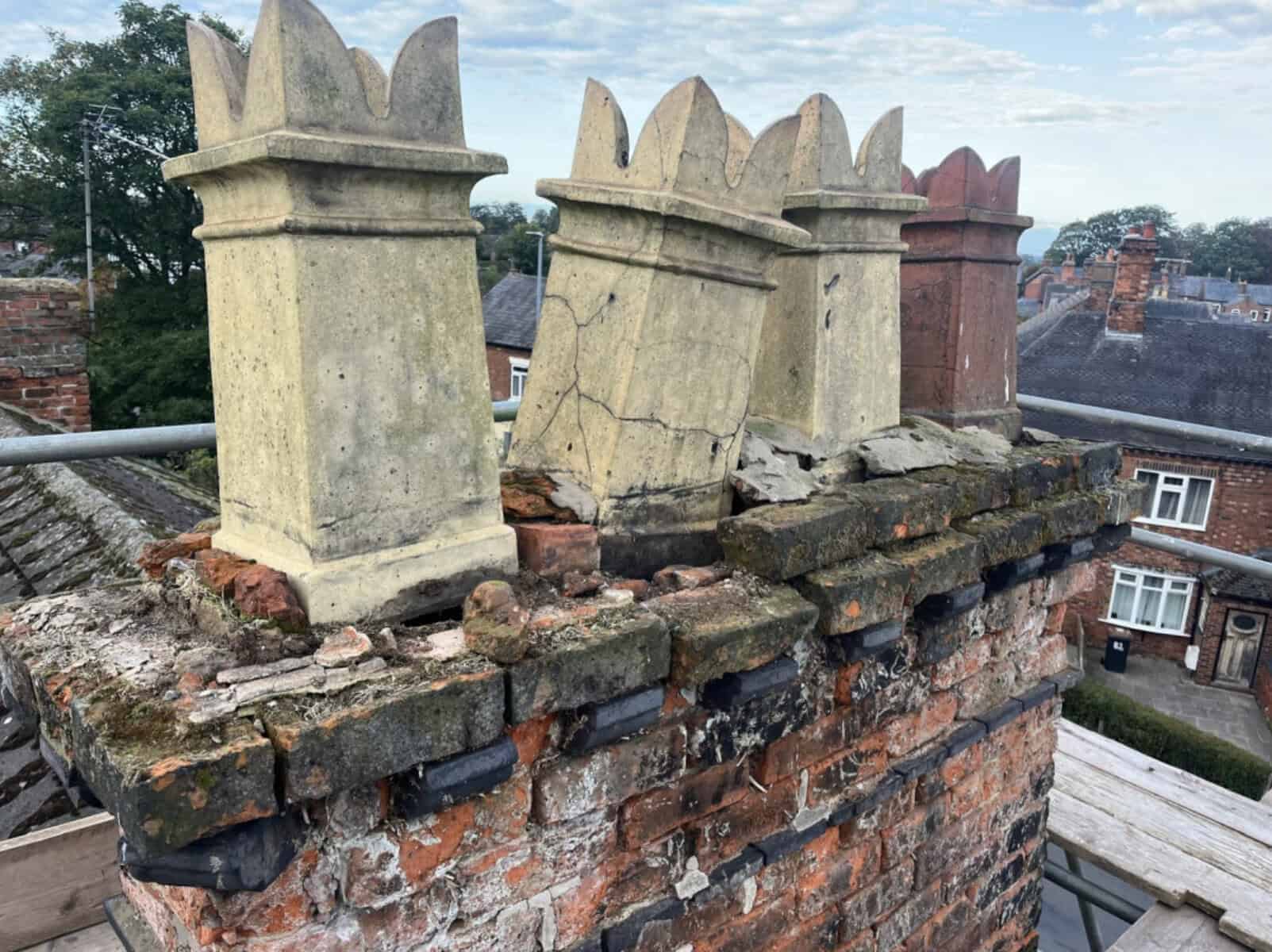
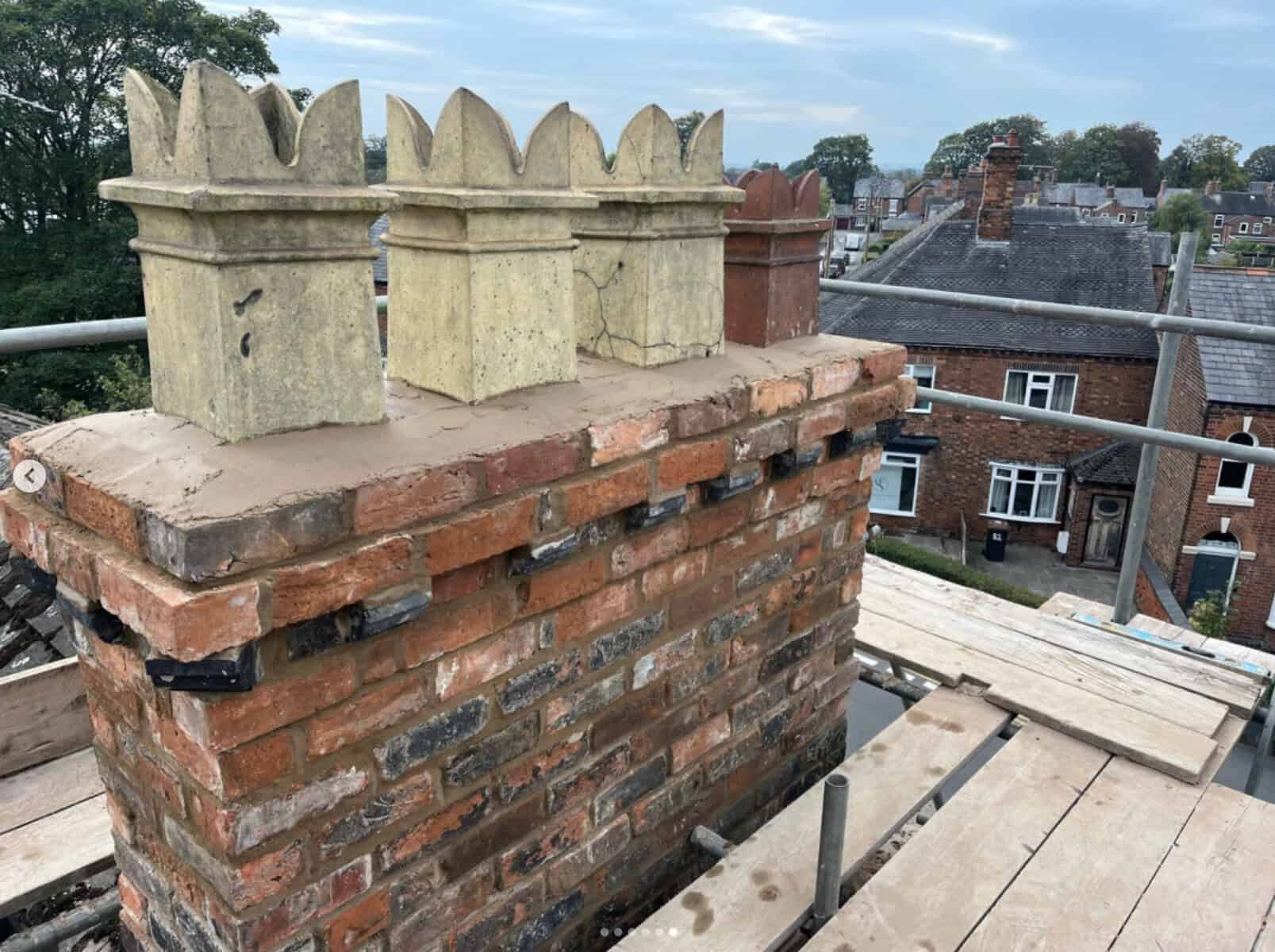

What can chimney repointing do to keep your home protected for years to come?
Chimney repointing is one of the simplest and most effective ways to stop long-term damage before it starts. Fresh, properly applied mortar keeps water out of the brickwork, prevents frost from breaking down the joints and stops cracks spreading through the stack. Done correctly, it can add decades to the life of your chimney.
At Cheshire Pointing Ltd, we specialise in restoring chimney stacks to full strength. Our repointing work improves stability, reduces maintenance costs and prevents leaks that can travel into the loft, ceilings or internal chimney breast. With over 22 years of experience across Cheshire, Staffordshire, Wirral and Derbyshire, we know exactly what’s needed to protect both modern chimneys and older brickwork.
You’re welcome to view our projects page to see how effective repointing is in improving appearance, extending lifespan and keeping homes safe from avoidable damage.
When Does Your Chimney Need Repointing?
Crumbling or missing chimney mortar
Peeling paint around chimney area
Leaning / shifted chimney stack
Hollow or crumbling internal plaster
Damp patches on chimney breast
Gaps between stack and roof
Musty smells near chimney breast
Recessed external mortar joints
Spalled or blown chimney bricks
White salts showing through plaster
Loose or cracked chimney pots
Debris or grit in fireplace
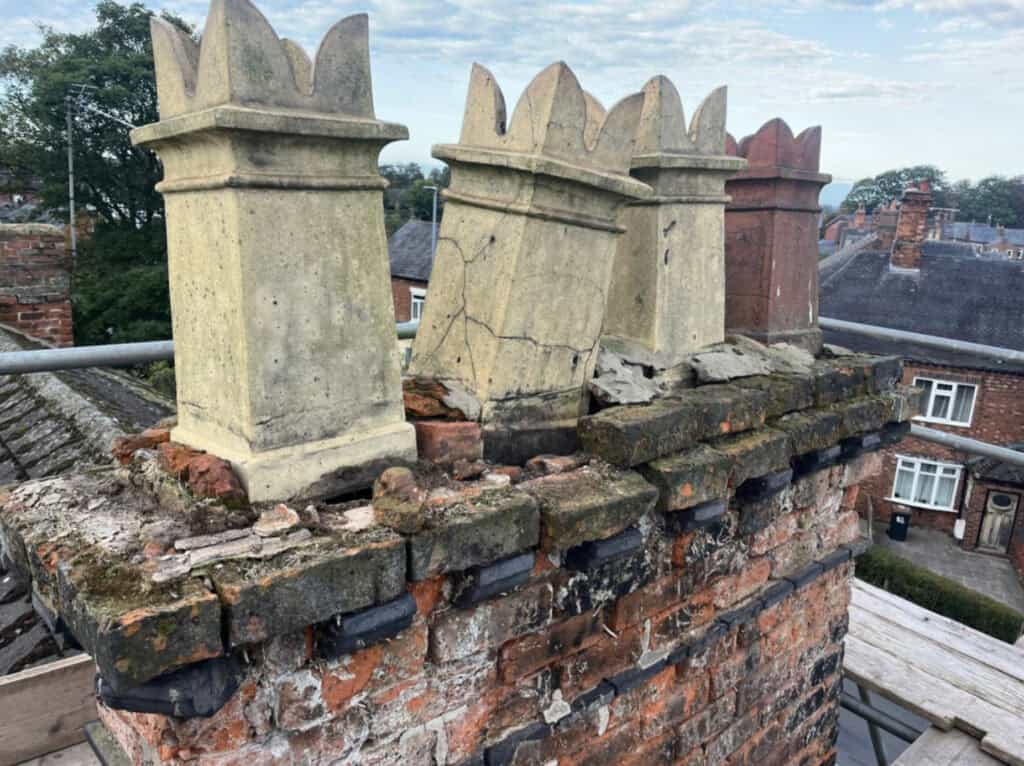
Need your Chimney To Be Repaired Or Rebuilt?
If you need more than repointing and you have crumbling brickwork, loose pots or a leaning stack aren’t just ugly – they’re a genuine safety risk and a fast track to leaks and damp.
We carry out full chimney inspections and will give you straight advice on whether a repair is enough or a full rebuild is the sensible option. Our team can:
- Rebuild unsafe or damaged stacks
- Replace or re‑bed chimney pots
- Repoint failing mortar and bricks
- Renew lead flashings and cowls
All work is carried out safely with proper access, and we leave your roof watertight and your chimney structurally sound for years to come.
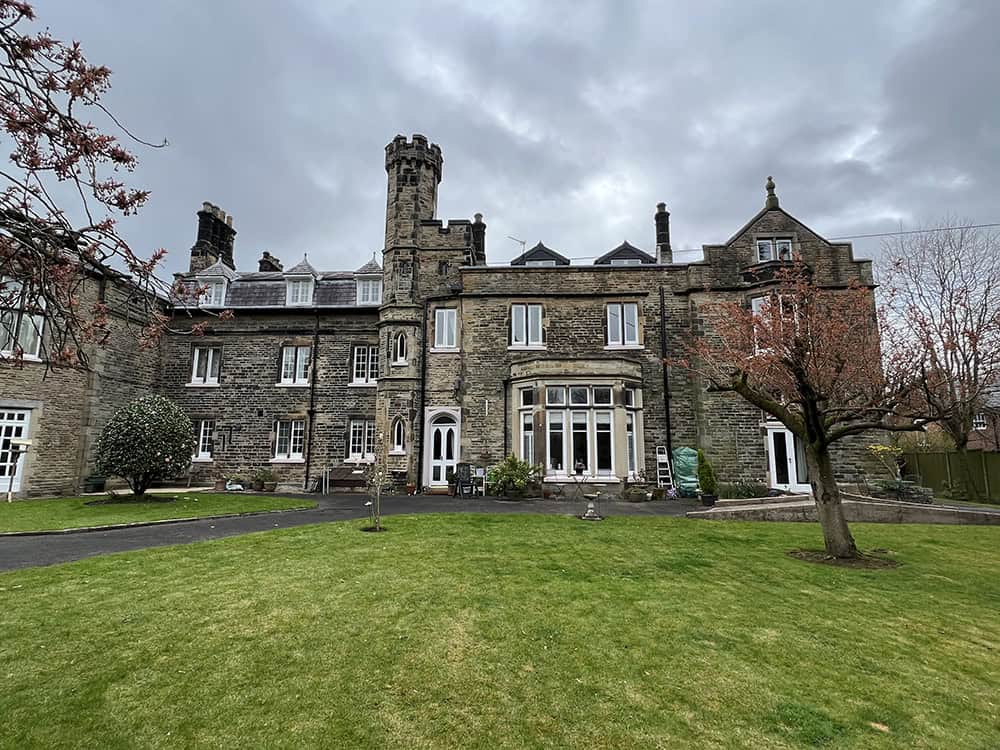
Heritage & Listed Buildings
Older and listed buildings can’t be treated like modern brickwork. Use the wrong materials – usually hard sand‑and‑cement – and you trap moisture, damage the brick or stone and fall foul of conservation requirements.
For heritage work we:
- Use traditional lime mortars, matched for colour, texture and strength
- Favour reversible, minimal‑intervention methods so future repairs aren’t boxed in
- Salvage and reuse original bricks and stone wherever it’s safe to do so
- Liaise with conservation officers, architects and surveyors, providing samples, method statements and progress photos as needed
Whether it’s a Grade II cottage or a larger historic building, the aim is simple: make it safe, dry and durable without stripping away its character.
Find out more about how we handle heritage and listed projects on our Heritage & Listed Buildings page.
Why Choose Cheshire Pointing Ltd
Read our reviews
Chimney Repointing in Alderley Edge – Local Area
Nestled on a dramatic sandstone ridge overlooking the Cheshire Plain, Alderley Edge is a village of distinctive character and architectural charm. Its streets are lined with a rich variety of properties, from grand Victorian villas and traditional semi-detached homes to modern apartments, showcasing a blend of historic and contemporary design. Many buildings feature local materials like Cheshire sandstone and traditional red brick, with roofs of Welsh slate or clay tiles, all contributing to the area’s unique aesthetic. As much of the village falls within a conservation area, any work, including chimney repointing, requires a sensitive approach to preserve the architectural integrity of these beautiful homes. From our base in Alderley Edge, we are well-placed to serve the surrounding communities, including Styal, Knutsford, and Macclesfield, offering expert repointing services that respect the heritage of your property.
We also cover the surrounding areas of Styal, Knutsford, Macclesfield, Wilmslow and Prestbury, so if your property is nearby, we are happy to provide a free quotation for chimney repointing or any other pointing work.